Showing posts with label GeForce. Show all posts

Friday, September 9, 2016

NVIDIA GeForce GTX 1080

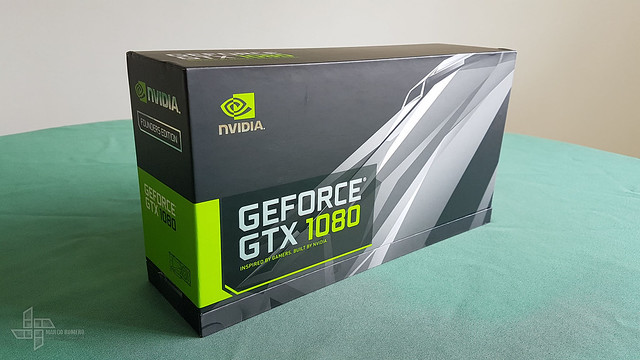
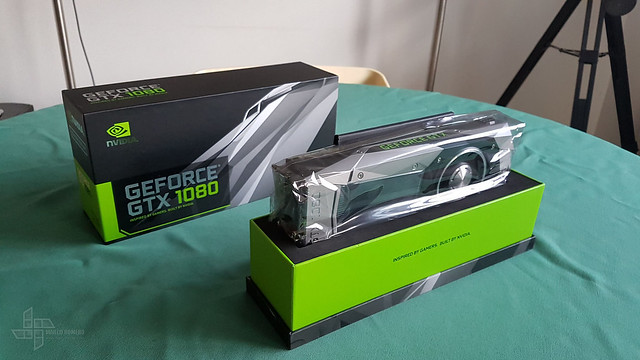
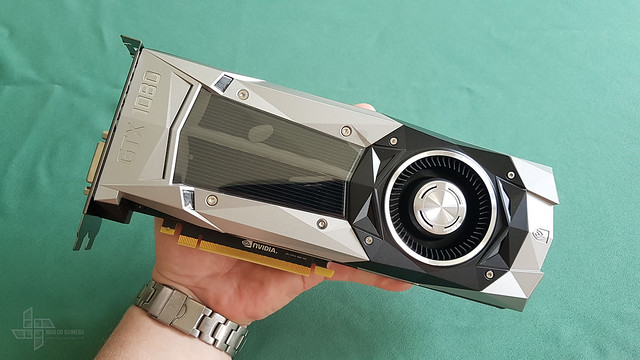
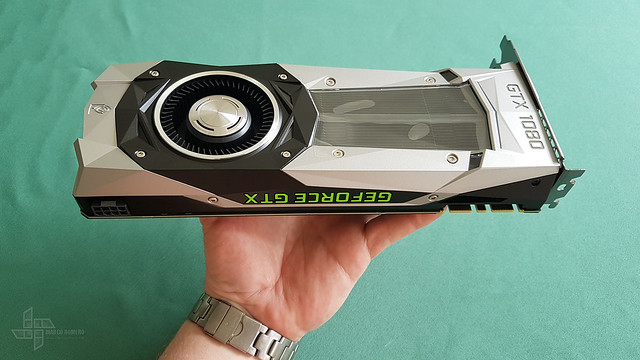
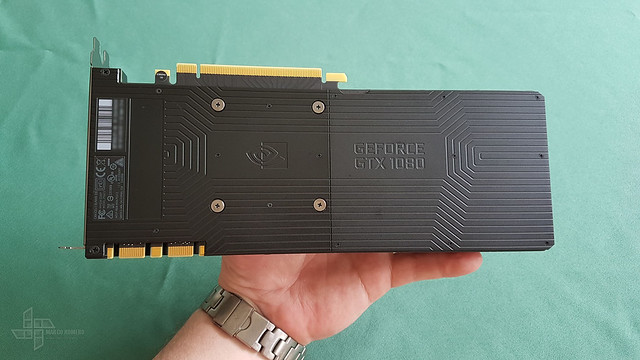
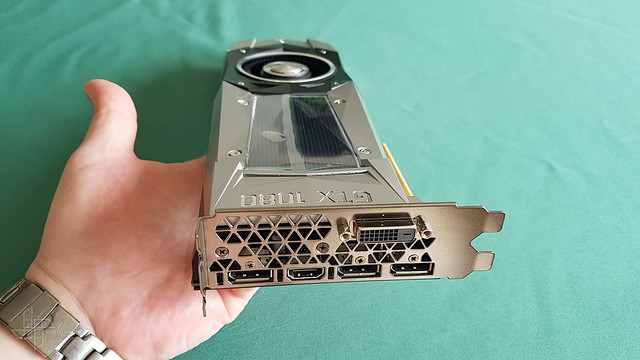
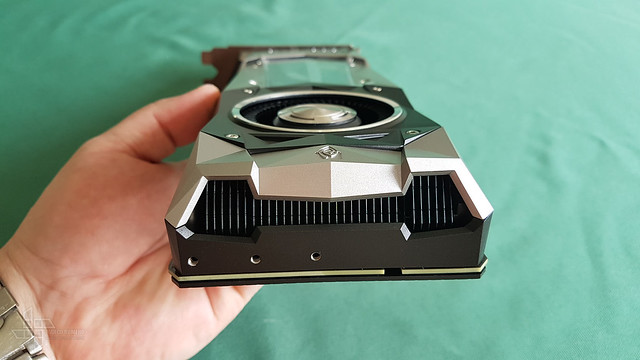
NVIDIA GeForce GTX 1080 Founders Edition


It is a real pleasure announce to computer enthusiasts and business partners the latest hardware update, the "NVIDIA GeForce GTX 1080 Founders Edition"; with the investment in this new tool will allow to continue my developments for Virtual Reality and once again continue offering the highest international standards. GeForce GTX 10-series graphics cards are powered by Pascal to deliver up to 3x the performance of previous-generation graphics cards, plus innovative new gaming technologies and breakthrough VR experiences. The new GeForce GTX 1080 is meticulously crafted to offer superior heat dissipation using vapor chamber cooling technology and premium materials, so it runs as cool as it looks. The GeForce GTX 1080 will be the world’s first, commercially available graphics card based on the latest FinFET node which delivers an insane increase in transistor density and allows GPUs to deliver high clock speeds compared to previous generations.


GeForce Experience 3.0.5.22

Benchmarks:


GPU-Z v1.10.0 validation: http://www.techpowerup.com/gpuz/details/2nynp/

Fire Strike Ultra (V1.1): http://www.3dmark.com/fs/10122314

Fire Strike Extreme (V1.1): http://www.3dmark.com/fs/10122445

Fire Strike (V1.1): http://www.3dmark.com/fs/10122495

3DMark Vantage Performance (10/09/2016): http://www.3dmark.com/3dmv/5509929

3DMark 11 Performance 1.0 (10/09/2016): http://www.3dmark.com/3dm11/11568196

3DMark06 (10/09/2016): http://www.3dmark.com/3dm06/17915710

PCMark 7 (10/09/2016): http://www.3dmark.com/pcm7/1062124

PCMark 8 (10/09/2016): http://www.3dmark.com/pcm8cr3/61808


GPU-Z v1.10.0 validation
GPU-Z v1.10.0 validation: http://www.techpowerup.com/gpuz/details/2nynp/
SteamVR Performance Test Results
SteamVR Performance Test Results (10/09/2016)
3DMark Vantage Performance
3DMark Vantage Performance (10/09/2016): http://www.3dmark.com/3dmv/5509929
3DMark 11 Performance 1.0 (10/09/2016): http://www.3dmark.com/3dm11/11568196

UNIGINE Heaven 4 Benchmark
UNIGINE Heaven 4 Benchmark (03/10/2016)
https://unigine.com/en/products/benchmarks/heaven


VRMark Orange Room Benchmark (04/11/2016):
http://www.3dmark.com/vrpor/21828


Photographic reference:


NVIDIA_GTX_1080_02

NVIDIA_GTX_1080_05

NVIDIA_GTX_1080_07

NVIDIA_GTX_1080_11

NVIDIA_GTX_1080_12

NVIDIA_GTX_1080_13

NVIDIA_GTX_1080_14


Recommended reviews:

GeForce GTX 1080 Founders Edition: Premium Construction & Advanced Features
http://www.geforce.com/whats-new/articles/geforce-gtx-1080-founders-edition

Nvidia GeForce GTX 1080 Review: Insane Gaming and VR Power In One Graphics Card
http://uploadvr.com/nvidia-geforce-gtx-1080-review/

NVIDIA GeForce GTX 1080 Official Slides Leaked – Async Compute, SMTP VR Processing, Higher Efficiency and More Detailed
http://wccftech.com/nvidia-geforce-gtx-1080-official-slides-leak/

Nvidia GeForce GTX 1080 and GTX 1070 detailed
http://www.pcgamer.com/nvidia-gtx-1080/

NVIDIA Reveals New GPU, GeForce GTX 1080 is Faster than the Titan X
http://www.roadtovr.com/nvidia-reveals-new-gpu-geforce-gtx-1080-is-built-for-vr/

NVIDIA GeForce GTX 1080 Review: A Look At 4K & Ultra-wide Gaming
http://techgage.com/article/nvidia-geforce-gtx-1080-review-a-look-at-4k-ultra-wide-gaming/

GeForce GTX 1080 tested with V-Ray
http://www.evermotion.org/articles/show/10189/geforce-gtx-1080-tested-with-v-ray


The NVIDIA GeForce GTX 1080 & GTX 1070 Founders Editions Review: Kicking Off the FinFET Generation
http://www.anandtech.com/show/10325/the-nvidia-geforce-gtx-1080-and-1070-founders-edition-review

Review: Nvidia GTX 1080
https://www.wired.com/2016/08/review-nvidia-gtx-1080/

"Tested: Nvidia GeForce GTX 1080 Video Card"
http://www.tested.com/tech/pcs/570381-tested-nvidia-geforce-gtx-1080-video-card/

"Nvidia GeForce GTX 1080 review: The most badass graphics card ever created"
http://www.pcworld.com/article/3071037/hardware/nvidia-geforce-gtx-1080-review-the-most-badass-graphics-card-ever-created.html

"GeForce GTX 1080 is a beautiful powerhouse, but you still may want to wait"
http://www.polygon.com/2016/5/17/11689352/nvidia-geforce-gtx-1080-hands-on-review

"GTX 1070 and GTX 1080 Premiere Pro Performance"
https://www.pugetsystems.com/labs/articles/GTX-1070-and-GTX-1080-Premiere-Pro-Performance-810/

"Nvidia GeForce GTX 1080 review - Pascal GPU Architecture"
http://www.guru3d.com/articles-pages/nvidia-geforce-gtx-1080-review,2.html

"Nvidia GeForce GTX 1080 review"
http://www.trustedreviews.com/nvidia-geforce-gtx-1080-review


Additional VR Hardware:

- Intel Dual Xeon Server http://goo.gl/6qFKat
- 3D Desktop Computer http://goo.gl/WqiqBp
- Oculus Rift DK2 http://goo.gl/O9K6Pf
- Homido VR headset http://goo.gl/fCltxb
- Stratus XL Controller http://goo.gl/90s69J
- Kinect 360 Motion Sensor http://goo.gl/VVLG5r
- Kinect V2 Motion Sensor http://goo.gl/0D6NQ8
- VR Hardware: http://goo.gl/f22O9t
- NVIDIA GeForce GTX 980 Ti Superclocked http://goo.gl/bSbZkm
- NVIDIA GeForce GTX 980 Superclocked http://goo.gl/Yhh4fb


Tuesday, July 14, 2015

NVIDIA GeForce GTX 980 Ti Superclocked

New Hardware Upgrade:


EVGA GeForce GTX 980 Ti Superclocked - 06G-P4-4992-KR

GeForce® GTX™ 980 Ti enables a new level of capabilities and sets a new benchmark in performance. Accelerated by the groundbreaking NVIDIA Maxwell™ architecture, it delivers the advanced technologies and horsepower to take on even the most challenging games at high settings in 4K and smooth, immersive virtual reality.

GPU-Z validation entry: http://www.techpowerup.com/gpuz/map74/


GTX 980 Ti architecture


http://maxwell.nvidia.com/gtx-980-ti/

http://www.geforce.com/hardware/desktop-gpus/geforce-gtx-980-ti

http://www.evga.com/Products/Product.aspx?pn=06G-P4-4992-KR

http://www.evga.com/articles/00934/EVGA-GeForce-GTX-980-Ti


The Graphic Card created for Virtual Reality:


VR Direct in a nutshell is a collection of technologies and software enhancements designed to improve the experience and performance of virtual reality headsets such as the Oculus Rift. From a practical perspective NVIDIA already has some experience in stereoscopic rendering through 3D Vision, and from a marketing perspective the high resource requirements of VR would be good for encouraging GeForce sales, so NVIDIA will be heavily investing into the development of VR technologies through VR Direct.

From a technical perspective the biggest thing that Oculus and other VR headset makers need from GPU manufacturers and the other companies involved in the PC ecosystem is methods of reducing the latency/input lag between a user’s input and when a finished frame becomes visible on a headset. While some latency is inevitable – it takes time to gather data and render a frame – the greater the latency the greater the disconnect will be between the user and the rendered world. In more extreme cases this can make the simulation unusable, or even trigger motion sickness in individuals whose minds can’t handle the disorientation from the latency. As a result several of NVIDIA’s features are focused on reducing latency in some manner.

First and foremost, for VR headsets NVIDIA has implemented a low latency mode that minimizes the amount of time a frame spends being prepared by the drivers and OS. In an average case this low latency mode eliminates 10ms of OS-induced latency from the rendering pipeline, and this is the purest optimization of the bunch.


Meanwhile at the more extreme end of the feature spectrum, NVIDIA will be supporting a feature called asynchronous warp. This feature, known by Oculus developers as time warp, involves rendering a frame and then at the last possible moment updating the head tracking information from the user. After that information is acquired, the nearly finished frame then has a post-process warping applied to it to take into account head movement since the frame was initially submitted, with the ultimate goal of this warping being the simulation of what the frame should look like had it been rendered instantaneously.

From a quality perspective asynchronous warp stands to be a bit of a kludge, but it is the single most potent latency improvement among the VR Direct feature set. By modifying the frame to account for the user’s head position as late as is possible, it reduces the perceived latency by as much as 25ms.


NVIDIA’s third latency optimization is less a VR optimization and more a practical effect of an existing technology, and that is Multi-Frame sampled Anti-Aliasing. As we'll discuss later in our look at this new AA mode, Multi-Frame sampled Anti-Aliasing is designed to offer 4x MSAA-like quality with 2x MSAA-like performance. Assuming a baseline of 4x MSAA, switching it out for Multi-Frame sampled Anti-Aliasing can shave an additional few milliseconds off of the frame rendering time.

Lastly, NVIDIA’s fourth and final latency optimization for VR Direct is VR SLI. And this feature is simple enough: rather than using alternate frame rendering (AFR) to render both eyes at once on one GPU, split up the workload such that each GPU is working on each eye simultaneously. AFR, though highly compatible with traditional monoscopic rendering, introduces additional latency that would be undesirable for VR. By rendering each eye separately on each GPU, NVIDIA is able to apply the performance benefits of SLI to VR without creating additional latency. Given the very high performance and low latencies required for VR, it’s currently expected that most high-end games supporting VR headsets will need SLI to achieve their necessary performance, so being able to use SLI without a latency penalty will be an important part of making VR gaming commercially viable.

On a side note, for the sake of clarity we do want to point out that many of NVIDIA’s latency optimizations come from the best practices suggestions of Oculus VR. Asynchronous warp and OS level latency optimizations for example are features that Oculus VR is suggesting for hardware developers and/or pursuing themselves. So while these features are very useful to have on GeForce hardware, they are not necessarily all ideas that NVIDIA has come up with or technologies that are limited to NVIDIA hardware (or even the Maxwell 2 architecture).

Moving on, other than NVIDIA’s latency reduction technologies the VR Direct feature set will also include some feature improvements designed to improve the quality and usability of VR. NVIDIA’s Dynamic Super Resolution (DSR) technology will be available to VR, and given the physical limits on pixel density in today’s OLED panels it will be an important tool in reducing perceptible aliasing. NVIDIA will also be extending VR support to GeForce Experience at a future time, simplifying the configuration of VR-enabled games. For VR on GeForce Experience NVIDIA wants to go beyond just graphical settings and also auto-configure inputs as well, handling remapping of inputs to head/body tracking for the user automatically.

Ultimately at this point VR Direct is more of a forward looking technology than it is something applicable today – the first consumer Oculus Rift hasn’t even been announced, let alone shipped – but by focusing on VR early NVIDIA is hoping to improve the speed and ease of VR development, and have the underpinnings in place once consumer VR gear becomes readily available.


                                                                                 "The NVIDIA GeForce GTX 980 Review: Maxwell Mark 2"
                                                                                  by Ryan Smith

Related Features:


Virtual Reality:
NVIDIA Maxwell GPUs: The Best Graphics Cards For Virtual Reality Gaming
http://www.geforce.com/whats-new/articles/maxwell-architecture-gpus-the-only-choice-for-virtual-reality-gaming


Voxel Global Illumination (VXGI):
Maxwell’s Voxel Global Illumination Technology Introduces Gamers To The Next Generation Of Graphics
http://www.geforce.com/whats-new/articles/maxwells-voxel-global-illumination-technology-introduces-gamers-to-the-next-generation-of-graphics


Dynamic Super Resolution (DSR)
:

GeForce Experience Introduces Dynamic Super Resolution: 4K-Quality Graphics On Any HD Monitor
http://www.geforce.com/whats-new/articles/geforce-experience-2-1-2-released

Dynamic Super Resolution Improves Your Games With 4K-Quality Graphics On HD Monitors
http://www.geforce.com/whats-new/articles/dynamic-super-resolution-instantly-improves-your-games-with-4k-quality-graphics


Multi-Frame Sampled Anti-Aliasing (MFAA):
Multi-Frame Sampled Anti-Aliasing Delivers Better Performance To Maxwell Gamers
http://www.geforce.com/whats-new/articles/multi-frame-sampled-anti-aliasing-delivers-better-performance-and-superior-image-quality


Photo Reference:


EVGA GeForce GTX 980 Ti Superclocked
EVGA GeForce GTX 980 Ti Superclocked - 06G-P4-4992-KR

EVGA GeForce GTX 980 Ti Superclocked
EVGA GeForce GTX 980 Ti Superclocked - 06G-P4-4992-KR

EVGA GeForce GTX 980 Ti Superclocked
EVGA GeForce GTX 980 Ti Superclocked - 06G-P4-4992-KR

EVGA GeForce GTX 980 Ti Superclocked
EVGA GeForce GTX 980 Ti Superclocked - 06G-P4-4992-KR

EVGA GeForce GTX 980 Ti Superclocked
EVGA GeForce GTX 980 Ti Superclocked - 06G-P4-4992-KR

EVGA GeForce GTX 980 Ti Superclocked
EVGA GeForce GTX 980 Ti Superclocked - 06G-P4-4992-KR

EVGA GeForce GTX 980 Ti Superclocked
EVGA GeForce GTX 980 Ti Superclocked - 06G-P4-4992-KR

EVGA GeForce GTX 980 Ti Superclocked
EVGA GeForce GTX 980 Ti Superclocked - 06G-P4-4992-KR

EVGA GeForce GTX 980 Ti Superclocked
EVGA GeForce GTX 980 Ti Superclocked - 06G-P4-4992-KR
EVGA GTX 980TI Backplate

http://www.evga.com/Products/Product.aspx?pn=100-BP-4995-B9
http://www.evga.com/products/pdf/100-BP-4995-B9.pdf

EVGA GTX 980TI Backplate

EVGA GTX 980TI Backplate

EVGA GTX 980TI Backplate

EVGA GTX 980TI Backplate

EVGA GTX 980TI Backplate

EVGA GTX 980TI Backplate

EVGA GTX 980TI Backplate

NVIDIA GeForce GTX 980 4GB 256 bit GDDR5 Superclocked - 04G-P4-2982-KR - 2048 CUDA Cores
http://maxwell.nvidia.com/gtx-980
http://www.evga.com/Products/Product.aspx?pn=04G-P4-2982-KR
http://www.geforce.com/hardware/desktop-gpus/geforce-gtx-980/specifications

  NVIDIA GeForce GTX 980 Ti 6GB 384 bit GDDR5 Superclocked - 06G-P4-4992-KR - 2816 CUDA Cores
http://www.geforce.com/hardware/desktop-gpus/geforce-gtx-980-ti
http://www.evga.com/Products/Product.aspx?pn=06G-P4-4992-KR


July 2015

Related links:

Monday, February 2, 2015

NVIDIA GeForce GTX 980 Superclocked

New Hardware Upgrade:
EVGA GeForce GTX 980 Superclocked - 04G-P4-2982-KR

The GeForce GTX 980 is the world’s most advanced GPU. Powered by next-generation NVIDIA® Maxwell™ architecture, it delivers incredible performance, unmatched power efficiency, and cutting-edge features.

 
http://maxwell.nvidia.com/gtx-980
http://www.geforce.com/hardware/desktop-gpus/geforce-gtx-980
http://www.evga.com/Products/Product.aspx?pn=04G-P4-2982-KR


GPU-Z validation entry: http://www.techpowerup.com/gpuz/mf7ce/


The Graphic Card created for Virtual Reality:

VR Direct in a nutshell is a collection of technologies and software enhancements designed to improve the experience and performance of virtual reality headsets such as the Oculus Rift. From a practical perspective NVIDIA already has some experience in stereoscopic rendering through 3D Vision, and from a marketing perspective the high resource requirements of VR would be good for encouraging GeForce sales, so NVIDIA will be heavily investing into the development of VR technologies through VR Direct.

From a technical perspective the biggest thing that Oculus and other VR headset makers need from GPU manufacturers and the other companies involved in the PC ecosystem is methods of reducing the latency/input lag between a user’s input and when a finished frame becomes visible on a headset. While some latency is inevitable – it takes time to gather data and render a frame – the greater the latency the greater the disconnect will be between the user and the rendered world. In more extreme cases this can make the simulation unusable, or even trigger motion sickness in individuals whose minds can’t handle the disorientation from the latency. As a result several of NVIDIA’s features are focused on reducing latency in some manner.

First and foremost, for VR headsets NVIDIA has implemented a low latency mode that minimizes the amount of time a frame spends being prepared by the drivers and OS. In an average case this low latency mode eliminates 10ms of OS-induced latency from the rendering pipeline, and this is the purest optimization of the bunch.


Meanwhile at the more extreme end of the feature spectrum, NVIDIA will be supporting a feature called asynchronous warp. This feature, known by Oculus developers as time warp, involves rendering a frame and then at the last possible moment updating the head tracking information from the user. After that information is acquired, the nearly finished frame then has a post-process warping applied to it to take into account head movement since the frame was initially submitted, with the ultimate goal of this warping being the simulation of what the frame should look like had it been rendered instantaneously.

From a quality perspective asynchronous warp stands to be a bit of a kludge, but it is the single most potent latency improvement among the VR Direct feature set. By modifying the frame to account for the user’s head position as late as is possible, it reduces the perceived latency by as much as 25ms.


NVIDIA’s third latency optimization is less a VR optimization and more a practical effect of an existing technology, and that is Multi-Frame sampled Anti-Aliasing. As we'll discuss later in our look at this new AA mode, Multi-Frame sampled Anti-Aliasing is designed to offer 4x MSAA-like quality with 2x MSAA-like performance. Assuming a baseline of 4x MSAA, switching it out for Multi-Frame sampled Anti-Aliasing can shave an additional few milliseconds off of the frame rendering time.

Lastly, NVIDIA’s fourth and final latency optimization for VR Direct is VR SLI. And this feature is simple enough: rather than using alternate frame rendering (AFR) to render both eyes at once on one GPU, split up the workload such that each GPU is working on each eye simultaneously. AFR, though highly compatible with traditional monoscopic rendering, introduces additional latency that would be undesirable for VR. By rendering each eye separately on each GPU, NVIDIA is able to apply the performance benefits of SLI to VR without creating additional latency. Given the very high performance and low latencies required for VR, it’s currently expected that most high-end games supporting VR headsets will need SLI to achieve their necessary performance, so being able to use SLI without a latency penalty will be an important part of making VR gaming commercially viable.

On a side note, for the sake of clarity we do want to point out that many of NVIDIA’s latency optimizations come from the best practices suggestions of Oculus VR. Asynchronous warp and OS level latency optimizations for example are features that Oculus VR is suggesting for hardware developers and/or pursuing themselves. So while these features are very useful to have on GeForce hardware, they are not necessarily all ideas that NVIDIA has come up with or technologies that are limited to NVIDIA hardware (or even the Maxwell 2 architecture).

Moving on, other than NVIDIA’s latency reduction technologies the VR Direct feature set will also include some feature improvements designed to improve the quality and usability of VR. NVIDIA’s Dynamic Super Resolution (DSR) technology will be available to VR, and given the physical limits on pixel density in today’s OLED panels it will be an important tool in reducing perceptible aliasing. NVIDIA will also be extending VR support to GeForce Experience at a future time, simplifying the configuration of VR-enabled games. For VR on GeForce Experience NVIDIA wants to go beyond just graphical settings and also auto-configure inputs as well, handling remapping of inputs to head/body tracking for the user automatically.

Ultimately at this point VR Direct is more of a forward looking technology than it is something applicable today – the first consumer Oculus Rift hasn’t even been announced, let alone shipped – but by focusing on VR early NVIDIA is hoping to improve the speed and ease of VR development, and have the underpinnings in place once consumer VR gear becomes readily available.


                                                                                 "The NVIDIA GeForce GTX 980 Review: Maxwell Mark 2"
                                                                                  by Ryan Smith

Related Features:


Virtual Reality:
NVIDIA Maxwell GPUs: The Best Graphics Cards For Virtual Reality Gaming
http://www.geforce.com/whats-new/articles/maxwell-architecture-gpus-the-only-choice-for-virtual-reality-gaming


Voxel Global Illumination (VXGI):
Maxwell’s Voxel Global Illumination Technology Introduces Gamers To The Next Generation Of Graphics
http://www.geforce.com/whats-new/articles/maxwells-voxel-global-illumination-technology-introduces-gamers-to-the-next-generation-of-graphics


Dynamic Super Resolution (DSR)
:

GeForce Experience Introduces Dynamic Super Resolution: 4K-Quality Graphics On Any HD Monitor
http://www.geforce.com/whats-new/articles/geforce-experience-2-1-2-released

Dynamic Super Resolution Improves Your Games With 4K-Quality Graphics On HD Monitors
http://www.geforce.com/whats-new/articles/dynamic-super-resolution-instantly-improves-your-games-with-4k-quality-graphics


Multi-Frame Sampled Anti-Aliasing (MFAA):
Multi-Frame Sampled Anti-Aliasing Delivers Better Performance To Maxwell Gamers
http://www.geforce.com/whats-new/articles/multi-frame-sampled-anti-aliasing-delivers-better-performance-and-superior-image-quality


Photo Reference:


February 2015