Monday, February 2, 2015

NVIDIA GeForce GTX 980 Superclocked

New Hardware Upgrade:
EVGA GeForce GTX 980 Superclocked - 04G-P4-2982-KR

The GeForce GTX 980 is the world’s most advanced GPU. Powered by next-generation NVIDIA® Maxwell™ architecture, it delivers incredible performance, unmatched power efficiency, and cutting-edge features.

 
http://maxwell.nvidia.com/gtx-980
http://www.geforce.com/hardware/desktop-gpus/geforce-gtx-980
http://www.evga.com/Products/Product.aspx?pn=04G-P4-2982-KR


GPU-Z validation entry: http://www.techpowerup.com/gpuz/mf7ce/


The Graphic Card created for Virtual Reality:

VR Direct in a nutshell is a collection of technologies and software enhancements designed to improve the experience and performance of virtual reality headsets such as the Oculus Rift. From a practical perspective NVIDIA already has some experience in stereoscopic rendering through 3D Vision, and from a marketing perspective the high resource requirements of VR would be good for encouraging GeForce sales, so NVIDIA will be heavily investing into the development of VR technologies through VR Direct.

From a technical perspective the biggest thing that Oculus and other VR headset makers need from GPU manufacturers and the other companies involved in the PC ecosystem is methods of reducing the latency/input lag between a user’s input and when a finished frame becomes visible on a headset. While some latency is inevitable – it takes time to gather data and render a frame – the greater the latency the greater the disconnect will be between the user and the rendered world. In more extreme cases this can make the simulation unusable, or even trigger motion sickness in individuals whose minds can’t handle the disorientation from the latency. As a result several of NVIDIA’s features are focused on reducing latency in some manner.

First and foremost, for VR headsets NVIDIA has implemented a low latency mode that minimizes the amount of time a frame spends being prepared by the drivers and OS. In an average case this low latency mode eliminates 10ms of OS-induced latency from the rendering pipeline, and this is the purest optimization of the bunch.


Meanwhile at the more extreme end of the feature spectrum, NVIDIA will be supporting a feature called asynchronous warp. This feature, known by Oculus developers as time warp, involves rendering a frame and then at the last possible moment updating the head tracking information from the user. After that information is acquired, the nearly finished frame then has a post-process warping applied to it to take into account head movement since the frame was initially submitted, with the ultimate goal of this warping being the simulation of what the frame should look like had it been rendered instantaneously.

From a quality perspective asynchronous warp stands to be a bit of a kludge, but it is the single most potent latency improvement among the VR Direct feature set. By modifying the frame to account for the user’s head position as late as is possible, it reduces the perceived latency by as much as 25ms.


NVIDIA’s third latency optimization is less a VR optimization and more a practical effect of an existing technology, and that is Multi-Frame sampled Anti-Aliasing. As we'll discuss later in our look at this new AA mode, Multi-Frame sampled Anti-Aliasing is designed to offer 4x MSAA-like quality with 2x MSAA-like performance. Assuming a baseline of 4x MSAA, switching it out for Multi-Frame sampled Anti-Aliasing can shave an additional few milliseconds off of the frame rendering time.

Lastly, NVIDIA’s fourth and final latency optimization for VR Direct is VR SLI. And this feature is simple enough: rather than using alternate frame rendering (AFR) to render both eyes at once on one GPU, split up the workload such that each GPU is working on each eye simultaneously. AFR, though highly compatible with traditional monoscopic rendering, introduces additional latency that would be undesirable for VR. By rendering each eye separately on each GPU, NVIDIA is able to apply the performance benefits of SLI to VR without creating additional latency. Given the very high performance and low latencies required for VR, it’s currently expected that most high-end games supporting VR headsets will need SLI to achieve their necessary performance, so being able to use SLI without a latency penalty will be an important part of making VR gaming commercially viable.

On a side note, for the sake of clarity we do want to point out that many of NVIDIA’s latency optimizations come from the best practices suggestions of Oculus VR. Asynchronous warp and OS level latency optimizations for example are features that Oculus VR is suggesting for hardware developers and/or pursuing themselves. So while these features are very useful to have on GeForce hardware, they are not necessarily all ideas that NVIDIA has come up with or technologies that are limited to NVIDIA hardware (or even the Maxwell 2 architecture).

Moving on, other than NVIDIA’s latency reduction technologies the VR Direct feature set will also include some feature improvements designed to improve the quality and usability of VR. NVIDIA’s Dynamic Super Resolution (DSR) technology will be available to VR, and given the physical limits on pixel density in today’s OLED panels it will be an important tool in reducing perceptible aliasing. NVIDIA will also be extending VR support to GeForce Experience at a future time, simplifying the configuration of VR-enabled games. For VR on GeForce Experience NVIDIA wants to go beyond just graphical settings and also auto-configure inputs as well, handling remapping of inputs to head/body tracking for the user automatically.

Ultimately at this point VR Direct is more of a forward looking technology than it is something applicable today – the first consumer Oculus Rift hasn’t even been announced, let alone shipped – but by focusing on VR early NVIDIA is hoping to improve the speed and ease of VR development, and have the underpinnings in place once consumer VR gear becomes readily available.


                                                                                 "The NVIDIA GeForce GTX 980 Review: Maxwell Mark 2"
                                                                                  by Ryan Smith

Related Features:


Virtual Reality:
NVIDIA Maxwell GPUs: The Best Graphics Cards For Virtual Reality Gaming
http://www.geforce.com/whats-new/articles/maxwell-architecture-gpus-the-only-choice-for-virtual-reality-gaming


Voxel Global Illumination (VXGI):
Maxwell’s Voxel Global Illumination Technology Introduces Gamers To The Next Generation Of Graphics
http://www.geforce.com/whats-new/articles/maxwells-voxel-global-illumination-technology-introduces-gamers-to-the-next-generation-of-graphics


Dynamic Super Resolution (DSR)
:

GeForce Experience Introduces Dynamic Super Resolution: 4K-Quality Graphics On Any HD Monitor
http://www.geforce.com/whats-new/articles/geforce-experience-2-1-2-released

Dynamic Super Resolution Improves Your Games With 4K-Quality Graphics On HD Monitors
http://www.geforce.com/whats-new/articles/dynamic-super-resolution-instantly-improves-your-games-with-4k-quality-graphics


Multi-Frame Sampled Anti-Aliasing (MFAA):
Multi-Frame Sampled Anti-Aliasing Delivers Better Performance To Maxwell Gamers
http://www.geforce.com/whats-new/articles/multi-frame-sampled-anti-aliasing-delivers-better-performance-and-superior-image-quality


Photo Reference:


February 2015

Wednesday, December 17, 2014

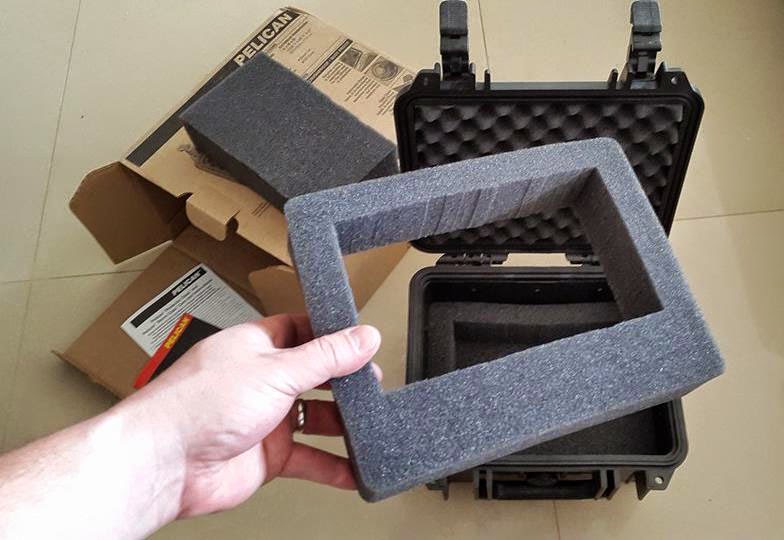
PELICAN 1300: The perfect Protector Case for Oculus Rift DK2


PELICAN 1300: The perfect Protector Case for "Oculus Rift DK2"
  • Perfect size fit.
  • Easy to customize with Pelican 1301 Foam Set.
  • Light weight to carry.
  • Made for heavy duty.

PELICAN 1300 Protector Case
http://www.pelican.com/cases_detail.php?Case=1300

OVERVIEW


    Watertight, crushproof, and dustproof
    Easy open Double Throw latches
    Open cell core with solid wall design - strong, light weight
    O-ring seal
    Automatic Pressure Equalization Valve
    Stainless steel hardware
    Pick N Pluck™ with convoluted lid foam
    Lifetime Guarantee of Excellence

Interior (L x W x D)
9.17" x 7" x 6.12" (23.3 x 17.8 x 15.5 cm)

Exterior (L x W x D)
10.62" x 9.68" x 6.87" (27 x 24.6 x 17.4 cm)

Body: Polypropylene
Foam: 1.3 lb Polyurethane
Latch: ABS
Purge Body: ABS
Lid O-Ring: Polymer
Purge Vent: 3 Micron Hydrophobic Non-Woven PET
Pins: Stainless Steel
Purge O-Ring: 70 Shore Nitrile


PHOTO REFERENCE:

PELICAN 1300 Protector Case
PELICAN 1300 Protector Case - 1301 Replacement Foam Set

PELICAN 1300 Protector Case - 1301 Replacement Foam Set

PELICAN 1300 Protector Case - Oculus Rift DK2

PELICAN 1300 Protector Case - 1301 Replacement Foam Set

PELICAN 1300 Protector Case - 1301 Replacement Foam Set

PELICAN 1300 Protector Case - Oculus Rift DK2

PELICAN 1300 Protector Case - Oculus Rift DK2


Friday, November 14, 2014

OCULUS RIFT DK2


Oculus Rift - Development Kit 2


The DK2 has a 5-inch 1080p OLED display with low-persistence technology. Positional tracking is achieved with an array of IR LEDs and a custom camera. For the new Oculus Rift dev kit, the IR LEDs seen on Crystal Cove have been hidden behind an IR-transparent housing, so no more white dots on the outside of the unit. The lenses have been improved over the DK1; they are larger and clearer across the board. The camera that ships with the device is custom made by Oculus VR, not a rebrand of some existing device. Thanks to the camera and the IR LED array, the unit is capable of positional tracking with sub-millimeter accuracy.

    Display
        Resolution: 960×1080 per eye
        Refresh Rate: 75 Hz, 72 Hz, 60 Hz
        Persistence: 2 ms, 3 ms, full
        Viewing Optics: 100º Field of View (nominal)
    Interfaces
        Cable: 10’ (detachable)
        Input: HDMI 1.4b
        USB device: USB 2.0
        USB host: USB 2.0 (requires DC Power Adapter)
        Camera USB: USB 2.0
    Inertial Tracking
        Sensors: Gyroscope, Accelerometer, Magnetometer
        Update Rate: 1000 Hz
    Positional Tracking
        Sensor: Near Infrared CMOS Sensor
        Update Rate: 60 Hz
        Weight: 440 g (without cable)
    Included Accessories
        DC Power Adapter
        International Power Plugs
        Nearsighted lens cups
        Lens cleaning cloth


Related links:


http://www.oculusvr.com/dk2/

http://vrwiki.wikispaces.com/Oculus+Rift
 

http://en.wikipedia.org/wiki/Oculus_Rift

http://www.theriftarcade.com/oculus-rift-dk2-review/


http://in2gpu.com/2014/08/10/oculus-rift-dk1-vs-dk2/

http://www.roadtovr.com/oculus-rift-dk2-review-dk1-comparison-vr-headset/

http://www.vrworld.com/2014/09/20/virtual-reality-augmented-reality-going/


Oculus Rift - Development Kit 2


Tuesday, October 21, 2014

NVIDIA GeForce GTX 690 - Quad SLI


NVIDIA GeForce GTX 690 - Quad SLI


NVIDIA GeForce SLI Logo


Combining the power of two Kepler GPUs, the GeForce GTX 690 is the fastest graphics card ever built. The GTX 690 uses hardware based frame metering for smooth, consistent frame rates across both GPUs. A meticulously designed board with dual vapor chamber coolers ensure quiet operation.

The GeForce GTX 690 was a enthusiast-class graphics card by NVIDIA, launched in May 2012. Built on the 28 nm process, and based on the GK104 graphics processor, in its GK104-355-A2 variant, the card supports DirectX 12.0. The GK104 graphics processor is an average sized chip with a die area of 294 mm² and 3,540 million transistors. GeForce GTX 690 combines two graphics processors to increase performance. It features 1536 shading units, 128 texture mapping units and 32 ROPs per GPU. NVIDIA has placed 4,096 MB GDDR5 memory on the card, which are connected using a 256-bit memory interface per GPU (each GPU manages 2,048 MB). The GPU is operating at a frequency of 915 MHz, which can be boosted up to 1019 MHz, memory is running at 1502 MHz.

NVIDIA GK104 Architecture

NVIDIA's GK104 GPU uses the Kepler architecture and is made using a 28 nm production process at TSMC. With a die size of 294 mm² and a transistor count of 3,540 million it is a medium-sized chip. GK104 supports DirectX 12.0 (Feature Level 11_0). It features 1536 shading units, 128 texture mapping units and 32 ROPs. The GK104 contains four GPCs with a total of eight SMXs, 1536 CUDA cores, eight geometry units, four raster units, 128 texture units, and 32 ROP units. The base clock is 1006MHz, but it can dynamically boost to 1058MHz and beyond for more performance (about 5% supposedly). The card also carries 2GB of GDDR5 VRAM running at 6008MHz with a 256-bit interface providing 6.0Gb/s of throughput.
+Info: https://www.techpowerup.com/gpu-specs/nvidia-gk104.g108


Being a dual-slot card, the NVIDIA GeForce GTX 690 draws power from 2x 8-pin power connectors, with power draw rated at 300 W maximum. Display outputs include: 3x DVI, 1x mini-DisplayPort. GeForce GTX 690 is connected to the rest of the system using a PCI-Express 3.0 x16 interface. The card measures 279 mm in length, and features a dual-slot cooling solution. Its price at launch was 999 US Dollars.

https://www.techpowerup.com/gpu-specs/geforce-gtx-690.c361

Scalable Link Interface (SLI) is a brand name for a multi-GPU technology developed by NVIDIA for linking two or more video cards together to produce a single output. SLI is an algorithm of parallel processing for computer graphics, meant to increase the processing power available for graphics.

NVIDIA SLI Technology:
GPU-Z validation entry: http://www.techpowerup.com/gpuz/h7xxv/


Content on this page requires a newer version of Adobe Flash Player.

Get Adobe Flash player

NVIDIA GeForce GTX 690 dual-GPU Kepler architecture
https://en.wikipedia.org/wiki/Kepler_(microarchitecture)

NVIDIA GeForce GTX 690
EVGA GeForce GTX 690 Signature
https://www.evga.com/Products/Specs/GPU.aspx?pn=BE6D6573-5B67-446C-B76C-C09614C70991
NVIDIA GeForce GTX 690 - Back
EVGA GeForce GTX 690 Signature
https://www.evga.com/Products/Specs/GPU.aspx?pn=BE6D6573-5B67-446C-B76C-C09614C70991

NVIDIA GeForce GTX 690 4GB 512-bit GDDR5 - 04G-P4-2692-KR - 3072 CUDA Cores (x2)
http://www.geforce.com/hardware/desktop-gpus/geforce-gtx-690
http://www.evga.com/Products/Specs/GPU.aspx?pn=BE6D6573-5B67-446C-B76C-C09614C70991

NVIDIA GeForce GTX SLI Bridge (2-Way)
https://web.archive.org/web/20140226230947/http://www.geforce.com/hardware/technology/sli/bridges

NVIDIA GeForce GTX SLI Bridge (2-Way)


NVIDIA GeForce GTX SLI Bridge (2-Way)
EK-FC690 GTX Backplate (EOL)

NVIDIA GeForce GTX 690 (x2) - Quad SLI

NVIDIA GeForce GTX 690 (x2) - Quad SLI
https://web.archive.org/web/20160730214652/http://www.geforce.com/whats-new/guides/introduction-to-sli-technology-guide#1

Cooler Master Cosmos SE, custom assembly

Intel Dual Xeon Server custom assembly on Cooler Master Cosmos II Ultra case


Friday, May 9, 2014

3DS Max 2014 Certified Professional

Marco Romero - 3DS Max 2014 Certified Professional


I have the pleasure to notify the approval of "3DS Max 2014 Certified Professional" with score of 97% license number 00359311

You can check my instructional record doing the appropriate search by the following link: https://autodesk.starttest.com/ or directly via the following link: https://www.starttest.com/8.0.0.1/searchcert.aspx?cmd=detail&id=I0079FD67067CF7E750DA55&programid=58&target=%target%&type=%type%&limit=%limit%&loc=ENU&code=c761a0476a5b31e491607c9c57a37b471c35da59

Being awarded with this professional certification for fourth consecutive year, I can guarantee my work to the highest professional standards of international quality one more time, and move forward to ever more demanding projects who require the latest computer aided design technology.

I want to dedicate this award to my beloved wife for her unconditional support and this great love that strengthens us.

Best regards,

Marco Romero